Pheasant Facts
An Icon of the Midwest and Great Plains, the ring-necked pheasant is an intriguing species. Learn more fun facts about their characteristics, behaviors, habitats, and life cycle to truly understand the “King of Gamebirds.”
Ring-necked pheasants are one of North America’s most recognizable upland birds that rely on healthy grassland habitats for food, nesting, and shelter throughout their lives. Explore below the key traits, behaviors and life history facts that make pheasants such a fascinating species to conserve.
Identification
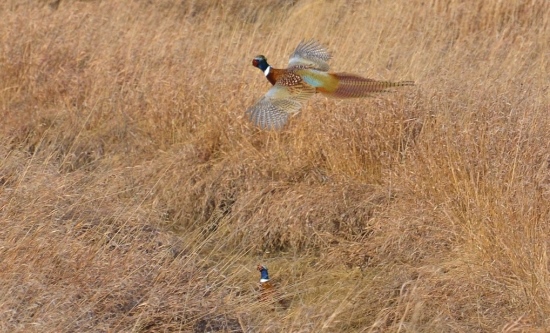
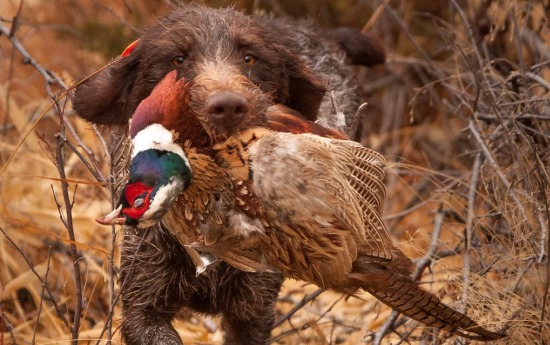
Male ring-necked pheasants are named for the featured white ring around their neck. They sport resplendent body plumage of bronze, purple, greens, blues and even some orange. A rooster's head displays plumage of iridescent blue, green and purple, with a distinctive red wattle around the eyes and on the cheeks.
Females are designed for hiding, nesting and raising young. Their feathers are brown, tan, cream and gray.
Pheasant Quick Facts
- Weight: Male ring-necked pheasants (roosters) average 2 to 3 pounds while their female (hen) counterparts average 2 pounds
- Length: Males measure 24 to 35 inches long (a rooster's tail may account for more than 20 inches of length); hens are smaller with a much shorter tail
- Flight Speed: 38-48 mph (but can reach up to 60 mph)
- Favorite Foods: Grains, seeds, greens, berries, fruits; insects are essential for chicks
- Preferred Habitat: Grasslands mixed with farmlands, wetlands and woody brush
- Average Nest Initiation: Early May
- Average Incubation Start: Late May
- Length of Incubation: 23 days
- Average First Hatch: Mid-June
- Average Clutch Size: 12 eggs
- Average Nest Success: 40-60%
- Average Hen Success: 50-70%
- Average Rate of Chick Survival: 50%
- Major Nest Predators: Fox, raccoon, skunk, feral cats
- Major Adult Predators: Human, fox, hawk, owl
Ecology
Pheasants thrive best in mixed landscapes where grasslands border to, and blend with, agricultural lands.
Typically, a mother hen and her brood will stay together until early autumn. While pheasants are able to fly fast for short distances, they prefer to run. They can run like the wind. Their flight speed can surpass 40 mph … especially with a tailwind.
Pheasants spend almost their entire life on the ground. Chicks need insects, and the protein they provide, to thrive. Pheasants eat grains, seeds, tender greens, berries and small fruits the rest of the year.
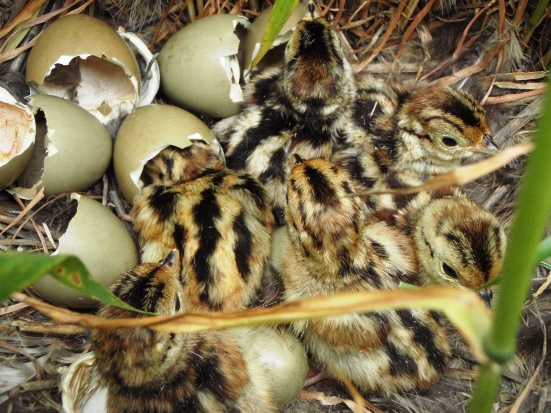
Roosters typically claim and defend a territory in spring, hoping to attract hens to mate with. Hen pheasant nest on the ground, producing a clutch of around 12 eggs over two to three weekperiod in April to June. The incubation period is about 23 days.
Pheasant chicks may start hatching in May, but mid-June is usually the peak of the hatch. If a pheasant nest fails before the eggs hatch, a hen may try to nest again.
Survival
Rarely, if ever, does a pheasant die of old age. In fact, the average life span is less than one year. The pheasant is a prey species and faces major sources of mortality beginning the day it is laid in the nest as an egg.
- Survival Rate - Mild winter, good habitat: 95%
- Survival Rate - Severe winter, good habitat: 50%
- Survival Rate - Mild winter, poor habitat: 80%
- Survival Rate - Severe winter, poor habitat: 20%
Upland Habitat Basics

Healthy upland habitat is the foundation of strong pheasant populations. From secure nesting cover to insect-rich brood habitat and protective winter cover, pheasants need a mix of habitat types close together to survive year-round. Understanding these basics is the first step toward creating and maintaining pheasant habitat.
Across the pheasant range, nesting cover, brood-rearing cover and winter cover are the main drivers of pheasant populations throughout the country.
Nesting Cover Basics
Nesting cover is the single most significant limiting factor for pheasant populations, which makes it a major consideration for upland habitat projects.
Here are some considerations for ideal nesting cover. It must be:
- Secure - Cover providing overhead and horizontal concealment from predators
- Undisturbed - Free from both human (mowing, dog training) and weather related (flooding) disturbances
- Diverse - Ideal nesting cover should contain several species of grasses and forbs at a minimum
- Dynamic - Planning ahead to manage for diverse nesting cover yields the best results
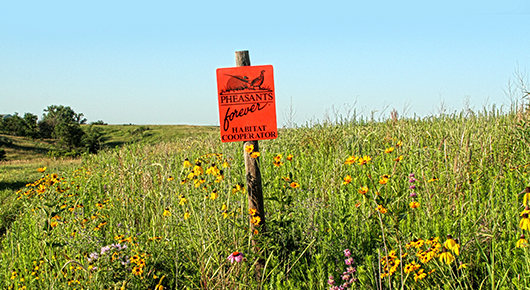
Pheasants live out their lives within a home range of about one square mile (640 acres), requiring all habitat components (nesting cover, brood habitat, winter cover and food plots) to be in close proximity.
Ideally, a minimum of 30-60 acres (about 5-10 percent) of this range should be nesting cover. Larger blocks of cover are preferable to narrow linear strips. However, linear cover waterways, roadsides and field borders are important to wildlife on a landscape level.
Winter Cover Basics
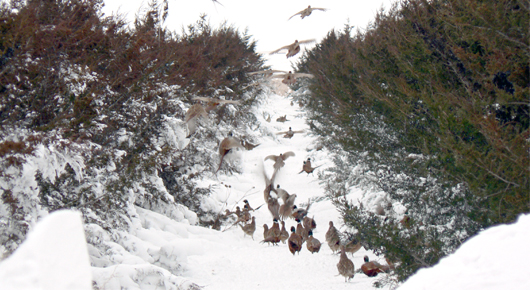
As temperatures plummet and snow blankets grassland habitat, pheasants and other wildlife need winter cover to escape bitter winds and heavy snow. Exposure to the extremes of winter can limit the condition and number of hen pheasants that survive to the nesting season, leading to reduced reproduction the following spring.
Quality winter cover located near a high-energy food source can provide the resources needed by pheasants and other wildlife to survive in harsh winter conditions. The thick cattails of wetlands, shelterbelts, and stiff-stemmed native grasses such as switchgrass and big bluestem, are examples of good winter cover.
Brood-Rearing Cover Basics
Brood rearing cover is critical to successful pheasant management.
Broadleaf plants (forbs, also known as wildflowers) attract insects that are critical for chick survival during a broods' first few weeks of life. Planting a pollinator mix can provide high-quality brood habitat. Other important brood rearing cover components include:
- Protection - Good lateral and overhead concealment from predators
- Openness - Travel corridors at ground level so tiny chicks can feed freely through a stand of cover
- Insect Production - Food sources readily available for hungry chicks
Need Habitat Guidance?
Contact your local Farm Bill Biologist (their planning services are free!) or check with your local chapter of Pheasants Forever, where you may find cost sharing, planting assistance, or good advice from a friendly chapter volunteer.
Food & Cover Plots
Food and cover plots play a critical role in helping pheasants survive winter’s toughest conditions. Find guidance on where to place plots, what to plant and how to design them to provide reliable food and protection when birds need it most.
Help Carry Birds Through the Toughest Winters
There are two critical factors for food plot design location.
Food plots should be placed next to heavy cover (i.e., shelterbelts and cattail sloughs), and sized right. If there is no winter cover available, food plots must be large enough (4 to 15 acres or more) to provide significant cover in addition to being a food source.
Food plots can be established almost anywhere, even on Conservation Reserve Program (CRP) and some other lands enrolled in conservation programs, or right next to a farm grove.
Above all else, the key to a successful food plot is its location next to heavy winter cover that is frequented by the area’s pheasants.
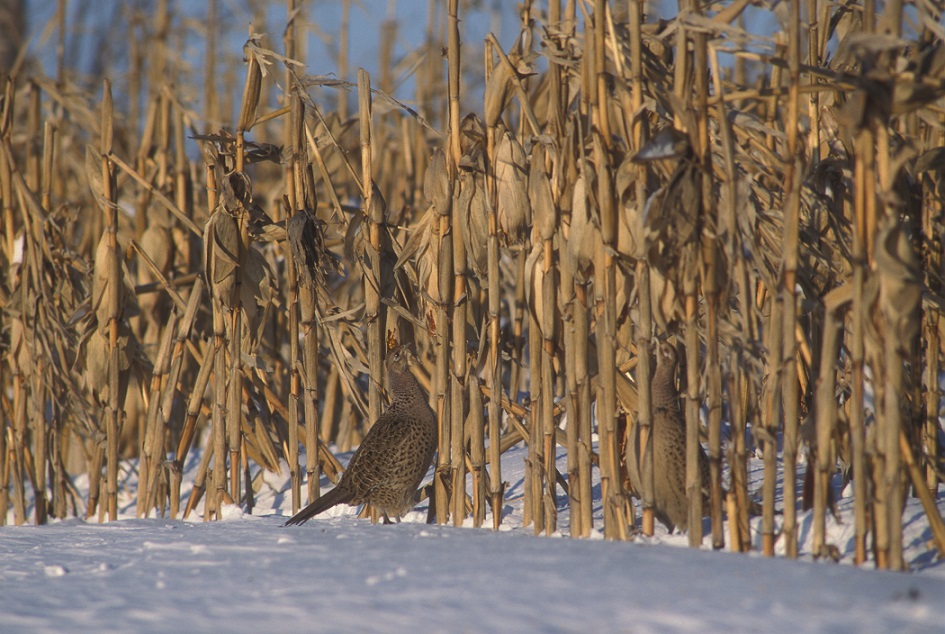
In open country, up to 50 rows of standing crop can be filled in a single blizzard. Large (4 to 10 acre) square or block-type food plots are preferable to smaller, linear food plots.
Whenever possible, large food plots should be located directly adjacent to woody and herbaceous winter cover on the windward side (generally the northwest). If this is not possible, effective food plots can be established nearby if they are linked via corridors of escape cover to traditional winter cover.
Where winter cover is scarce, large 10-acre-plus blocks of corn may be planted to serve as both food and shelter for the birds. Bear in mind that these areas will be used by many species of wildlife and that some critters, such as deer and turkeys, consume a great deal of grain daily and can potentially exhaust food resources well before winter has ended.
If plots will be small, minimize drifting by establishing snow traps (leave 4 to 6 rows windward, then harvest 12 to 20 adjacent rows as a snow catch).
This same approach can be used to make wetlands and small patches of woody cover more effective wintering area: Place food plots on their windward side to catch snow before it enters the winter roosting cover. Link any nearby satellite food plots to the best winter cover with travel corridors of heavy vegetation.
What to Plant
Plan your food plots carefully, taking the worst-case scenario into account. Don't bother to create a project that is going to be buried by the first winter blizzard.
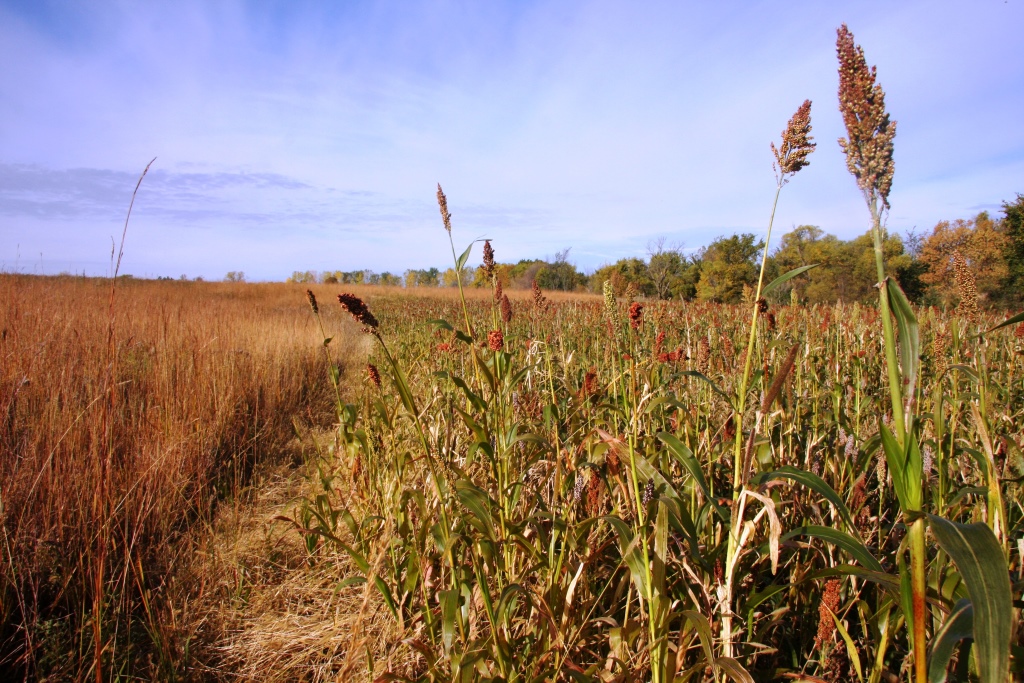
- Corn and grain sorghum are among the most reliable food sources. Planted separately or in combinations, they retain grain on stalks, stand well in winter weather, and provide high-energy food
- Large blocks of corn, and combinations of forage sorghum and grain sorghum, can also provide excellent cover.
- Wheat, soybeans, millets, rye and buckwheat are good food sources but are often buried by snow just when the birds need the food most.
- Don’t overlook sunflowers either … thought their great attractiveness to all wildlife can eliminate all the seeds quickly.
Establishing Your Plot
Whether by standard tractor and corn planter, grain drill, or via broadcast seeder mounted on an ATV or pickup truck, there are is multiple ways to get a food plot in the ground where it will do the most good for wildlife.
If you are without planting equipment, it may be available to rent from local conservation offices. Some agencies, and some chapters of Pheasants Forever, provide planting services at nominal rates, and there are often local custom operators willing to plant these areas.
Check Local Sources for Assistance
It often works well to dovetail food plots with lands enrolled in conservation programs. Acreage allowances and crop restrictions vary by program and state, so contact your local Pheasants Forever Farm Bill Biologist for guidelines. State wildlife agencies may also provide food plot assistance to landowners.
Effects of Predators
Predators are a natural part of the landscape, but habitat quality plays a much larger role in pheasant survival than predator control. Learn how well-designed upland habitat reduces predation and supports stronger, more resilient pheasant populations.
Predator control is fun to do, but it does not save pheasants. Good habitat is all that matters.
Few subjects generate as much concern and misunderstanding among pheasant hunters as predators and their impact on pheasant populations.
The best way to minimize the threat of predators? Make their job tougher with more and better upland habitat.
Pheasant Ecology: Predators
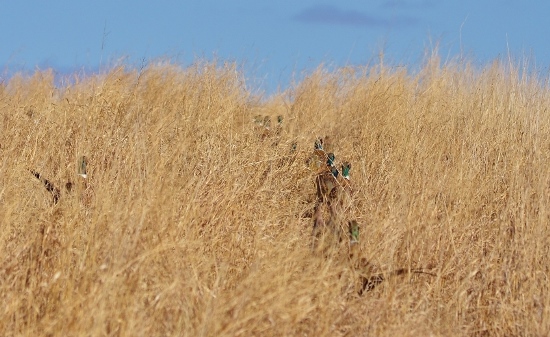
No single predator gets more blame for pheasant predation than coyotes, but research has proven that coyotes focus their foraging on rodents and rabbits, and do not take adult pheasants or nests as frequently as other mammalian predators (particularly racoons and skunks, as far as nests go).
In fact, the large home range and territorial nature of coyotes can actually result in lower populations of the smaller, more destructive predators.
Bottom line: Through adding and managing habitat, we decrease the impact predators have on existing nests while increasing the number of nests and population size in the area.
More Habitat, Less Predation, Best Outcome
A lack of quality cover can make pheasants susceptible to predators of both aerial and ground variety.
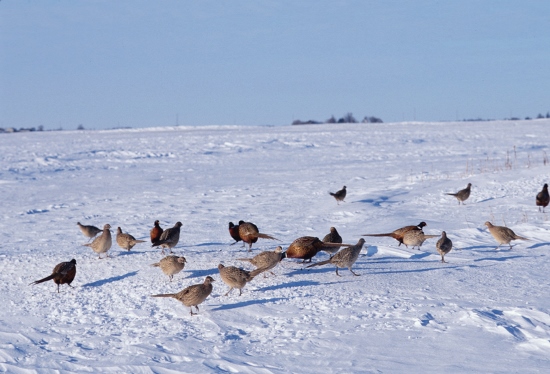
The amount of habitat (composition of the landscape) and the arrangement (configuration of that habitat) can increase nesting success by reducing the effectiveness of predators. Well-designed habitat projects can reduce predation on the acreage by up to 80 percent.
Larger patches of nesting cover (more than 40 acres) have significantly higher rates of nest success than smaller sized patches. More covers means it’s harder for predators to find the nests; it’s that simple.
For example, in agricultural landscapes where the primary form of grassland habitat is road and drainage ditches, predator activity is concentrated on those smaller strips of cover. In landscapes having a greater component of grassland habitat, predator activity is diluted throughout the many patches of habitat. High-grassland landscapes reduce the efficiency of predators.
Cover quality is also important. Dense blocks of undisturbed cover, such as Conservation Reserve Program acreage that is properly managed, are most effective at reducing predation. Dense mixtures of grasses and forbs offering good residual cover after winter are highly selected by pheasant hens because the persisting vegetation conceals nests from both avian and mammalian predators.
Predator Removal: Fun and Feels Good, but Ineffective
Shooting the occasional ‘coon (when the dogs aren’t around!) or putting out some traps, sure if fun. So is blasting a few coyotes in winter.
But come spring and summer, it is habitat that makes the difference for local pheasant populations.
In fact, science shows that sustained, intensive trapping and hunting efforts actually stimulate reproduction by predators, putting more of them in the landscape than ever.
Good habitat, and enough of it:
- decreases the impact predators have on existing pheasant nests
- increases the number of pheasants nests and population size in an area
Predators will take a toll, but with good habitat, they will never get all the pheasants, nests or chicks.
Effects of Weather
Weather can impact pheasants and other wildlife from year-to-year, but quality habitat negates the effects of harsh winters and wet springs over time.
Weather plays a major role in pheasant survival, especially when paired with habitat conditions. From cold, wet springs to harsh winters and summer drought, weather can limit pheasant numbers. Learn how quality habitat helps birds withstand these challenges and rebound when conditions improve.
Weather Combines with Habitat to Impact Pheasant Numbers
After good nesting and brood-rearing habitat, the second most influential factor for the success of pheasant populations is weather.
Pheasants are highly productive species, and their numbers can really expand fast when quality habitat conditions combine with mild weather. And quality habitat can reduce the impact of bad weather.
Weather & Habitat Drive Pheasant Populations
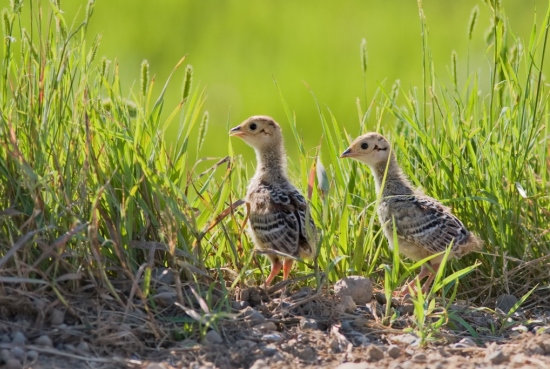
Severe winter storms can potentially decimate pheasant populations overnight. Cold wet springs can claim an equally devastating number of newborn chicks, which do not develop the ability to regulate their own temperature until three weeks of age.
The direct effects of weather are obvious. Less obvious is the indirect role weather can play on pheasant numbers.
Pheasants Thrive in Mild Weather
Generally speaking, pheasants do best in mild weather conditions. Mild weather is especially impactful during the nesting period.
Rain is essential to spur vegetation growth, create nesting cover, and grow insects for new broods to feed on. But heavy rains or flash flood events can wash out nests before eggs hatch, or wash away the young pheasants before they can escape the rising water. Cold rain can chill and kill very young chicks.
As nesting season progresses into June and chicks hatch, mild weather remains key for pheasants. Chicks become susceptible to exposure in elements that are too cold or too wet. In addition, periods of extended drought can adversely affect cover quality and make insects and food less available.
Winter: The Toughest Season
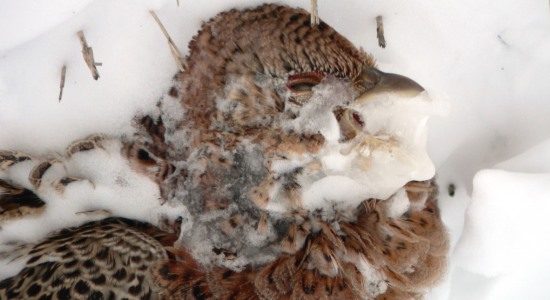
Contrary to popular belief, pheasants are more likely to die in winter due to freezing – from a lack of quality winter habitat – than they are of starving to death.
A 2°F night with even a moderate wind of 11 mph creates a wind chill of -25°F. And they call that an easy night in Minnesota, the Dakotas and Iowa! Conditions can get a LOT worse from there.
But cold and snow don’t necessarily mean a death sentence for pheasants. In fact, these hardy birds can do remarkably well in even tough winters … provided quality winter cover is available.
Winter habitat includes cattail sloughs, woody cover, stiff grass cover for roosting at night, shrubs to loaf in during the day, and food.
Pheasants essentially need to burn 25 percent more energy to survive during extreme winter conditions. As an example, the temperature inside a high-quality shelterbelt -- ideal cover from the cold -- can be 5°F warmer.
Finally, the same wind that creates biting wind chills can also be a blessing, as it blows many farm fields free of snow and uncovers areas where pheasants can feed.
Drought Hurts
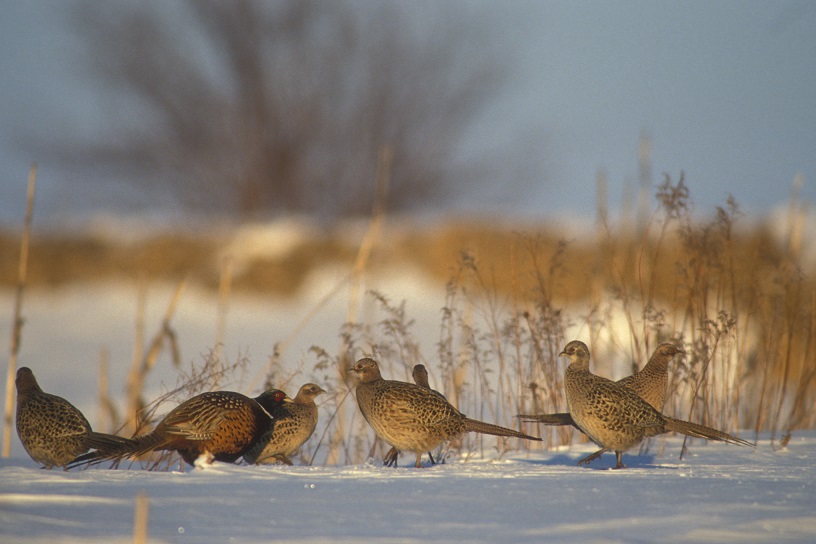
Hot, dry summers can impede insect production, depriving chicks of the insect protein they need early in life. Drought conditions will stunt vegetation growth, reducing the amount of cover on the landscape and leaving birds vulnerable to winter storms.
Is there an Answer for Adverse Weather?
The answer to that question is yes, and you guessed it: Habitat.
Although weather conditions cannot be controlled, providing critical habitat elements (nesting cover, brood-rearing cover, winter cover and food plots) can be controlled. Good habitat will help pheasant populations rebound – sometimes, almost unbelievably so – after a tough weather year.
Effects of Pheasant Hunting
Learn how sustainable hunting fits into healthy wildlife management and population dynamics.
Regulating Hunting Does Not Hurt Pheasant Populations
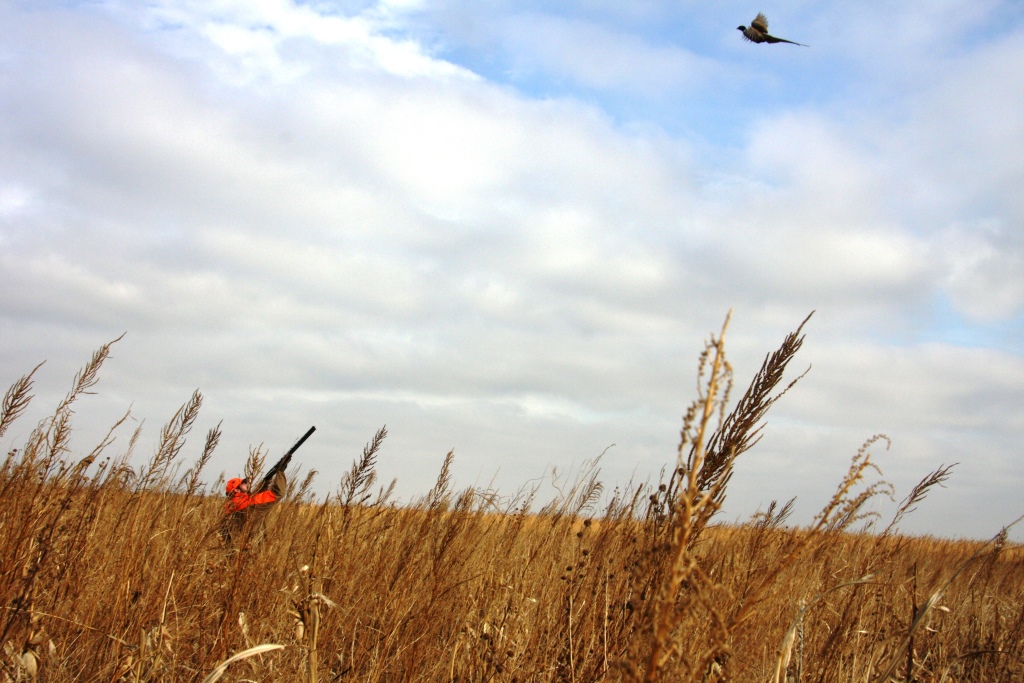
Maybe the most wondrous benefit of a rooster pheasant’s brilliant plumage and loud cackle is that we can quickly and easily tell him apart from a hen pheasant in the air.
Hen pheasants are never legal game. It’s easy to tell roosters from hens. We don’t shoot the birds that make the babies.
And rooster pheasants are promiscuous in mating season, meaning one male can service multiple hens.
In fact, many expert managers of pheasant land will tell you, “The more roosters we shoot the better,” leaving more resources for hens on the winter landscape so the birds come through healthy.
And any pheasant hunter knows: We’ll never get all the roosters!
It’s that simple.
When is Hunting Success, Harvest and Pressure the Greatest?
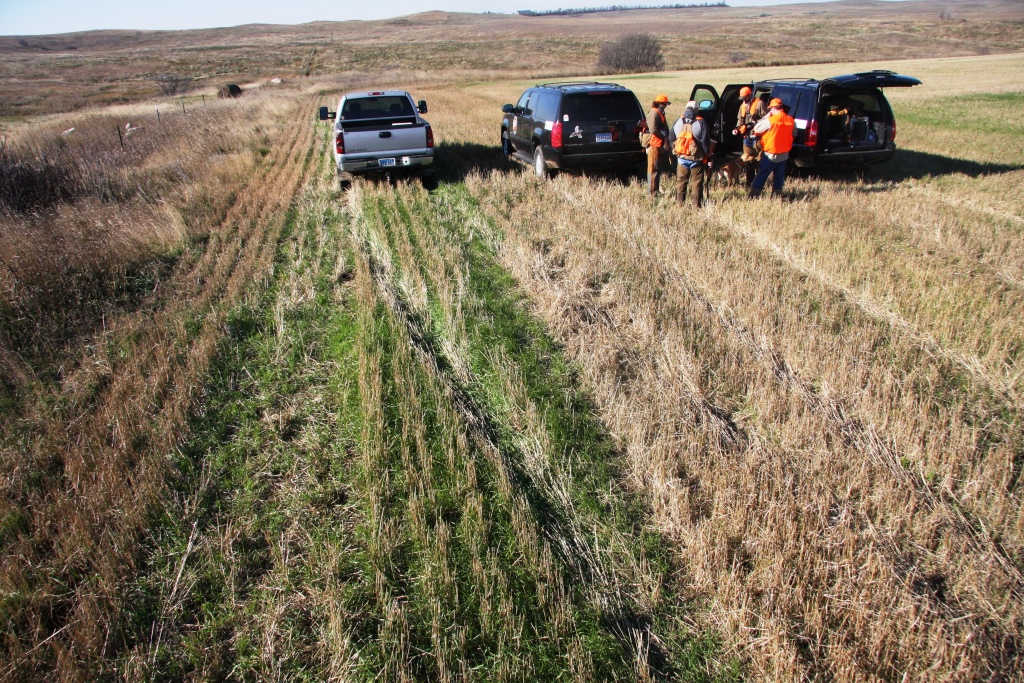
Hunting success, harvest and pressure are greatest during the early part of pheasant season. For example, Iowa's greatest hunting pressure occurs in the first half of the 70+ day season, with 71% of the trips taking place during the first 30-34 days.
It is common for 30 to 50% of the season's harvest to take place during opening weekend in many states.
How Great of a Problem are Crippled Birds?
Each year, a segment of the pheasant population is crippled by birdshot and not retrieved by hunters. We all lose pheasants now and again.
By using hunter interviews and check station data, biologists estimate an additional mortality of 10-35 percent occurs due to crippling. This additional loss of surplus males is inconsequential to future pheasant production.
Feel bad about losing a bird you winged? Count it in your daily bag.
How Does Hunting Affect Roosters in a Pheasant Population?
Survival of roosters in heavily hunted populations is normally very low, but that is not a concern. In fact, studies show that hunters could harvest 93 percent of pre-hunt rooster numbers without harming the population.
However, such a high rate of harvest is very unusual, if not impossible. The normal harvest rate is 45 to 65 percent. Adding an average crippling loss of 10 percent means that 55 to 75 percent of roosters are often removed from early fall’s pheasant population.
In states where significant harvest occurs (Iowa, Nebraska, Kansas, South Dakota and Minnesota), rooster kill can average around 70 percent.
What is the Effect of Restricting Bag Limits?
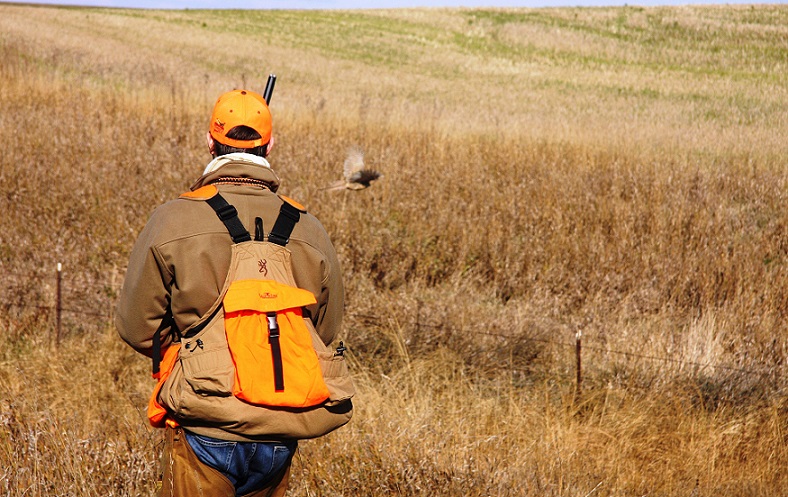
Reducing bag limits will have little effect on pheasant populations. In most states, the daily bag limit per hunter is only 2 to 4 roosters. Considering the majority of hunters are active only during the first two weeks of the season, the effect of restricting daily bag limits would be minimal.
One relevant reason to reduce bag limits, though, would be to equally distribute, or extend, the harvest among hunters. For example, Minnesota does this admirably by limiting hunters to 2 roosters until December 1, then making the bag limit 3 until the close of the season.
Does Changing Season Closing Dates Affect the Population?
Arguments have been made that closing hunting seasons earlier will prevent birds from being flushed from good winter cover into marginal areas where they are vulnerable to winter storms and predation.
But the reality is, because of diminishing returns to hunters as the season progresses, later season closures have a minimal effect on current or future pheasant populations.
Simply put, fewer people hunt in late season, these hunters only affect scattered pockets of cover, and any hunting that does get done hunting is more or less limited to (relatively) nicer weather days anyway.
What's the Bottom Line?
Liberal, legal, roosters-only seasons do not harm pheasant populations. If seasons work as designed, the outcome is a reduced standing population of male ring-necked pheasants for deep winter. Extensive research has shown this has little or no effect on pheasant reproduction come spring, and subsequent populations.
Shoot ‘em up!
Pheasant Stocking
Releasing pen-raised pheasants has proven largely ineffective at boosting wild populations. Learn why habitat improvement is the key to healthy, self-sustaining pheasant numbers.
Stocking pen-raised birds is not an efficient means to increase wild bird populations, as shown by numerous studies.
Such birds mostly provide predators a good feast … and the influx of food can actually attract more predators that will also hit any wild birds you do have.
You can’t grow pheasants where you don’t have habitat. Developing and enhancing habitat has proven to help increase ring-necked pheasant numbers.
What is Pheasant Stocking?
By definition, "stocking" is the release of pen-raised pheasants into habitat where wild birds already are present.
"Introductions" or "transplants" are different. These terms refer to the capture and release of wild birds into areas where birds are not generally present, using management techniques that have been studied thoroughly.
What About Stocking Young (8-14 Weeks Old) Pheasants?
On average, only 60 percent of young stocked birds will survive the initial week of release. After one month, roughly 25 percent will remain. Winter survival has been documented as high as 10 percent but seldom exceeds 5 percent of the released birds. Not a good return.
Will Predators Love Me for Stocking Pen-Raised Pheasants?
Yes. Predators take the real toll on pen-raised pheasants, accounting for more than 90 percent of all deaths. Pen-raised birds never had a chance to learn predator avoidance behavior. Starvation can also be a problem.
How can we put it scientifically here? Easy: Pen-raised birds are dumb.
Why Not Wait Until Spring to Release Breeder Hens?
Mortality is still very high: Roughly 40 to 70 percent of the hens will perish before attempting to nest. Also, high mortality rates continue even after nests are initiated or eggs successfully hatched, resulting in dismally low production.
The average production of spring-released hens ranges from 5 to 40 chicks per 100 hens released. Thus, released hens are not productive enough to replace their own losses.
Can't Survival Rates Be Different for Some Areas?
Not really. We must ask ourselves: Why is there a need to repeat stocking efforts on an annual basis if survival is as high as often claimed?
Stocking Worked Initially, Why Wouldn't it Work Now?
When pheasants were first transplanted (different than stocking), and introduced across the U.S., the landscape was far different from the one we have today. Farming techniques were gentler on the land, there was more habitat, field sizes were smaller and crops more diversified.
These habitat conditions created a situation ideally suited for the introduction of a farmland species like the ring-necked pheasant. Transplanting wild birds to new places worked; that is not stocking
What if I Just Want to Put a Few More Birds in the Bag?
Go for it!
But release the birds as close to the time you want to hunt as possible
Pen-raised roosters do provide shooting opportunities and a chance to keep your dog in shape. Just keep in mind that these birds are not going to produce a wild self-sustaining population in your area.
With Improved Habitat, Where Will Pheasants Come From?
Because of their high productivity, wild pheasants in an area can quickly populate newly created habitats. In unpopulated areas of suitable habitat, transplanting wild birds or their offspring (F1 generation) is the best solution.
Can We Realistically Rebuild Wild Pheasant Numbers?
Yes. During the past 50 years there has been a colossal amount of money spent on supplemental stocking programs by state and local governments, sportsmen's groups and private individuals. If these dollars would have been invested in habitat restoration, much wildlife, in addition to pheasants, would have benefited.
What's the Bottom Line?
If you like throwing away money and feeding predators, stock pheasants. If you want wild birds, invest dollars in creating and improving habitat, The wild birds will come.
Your cart is empty